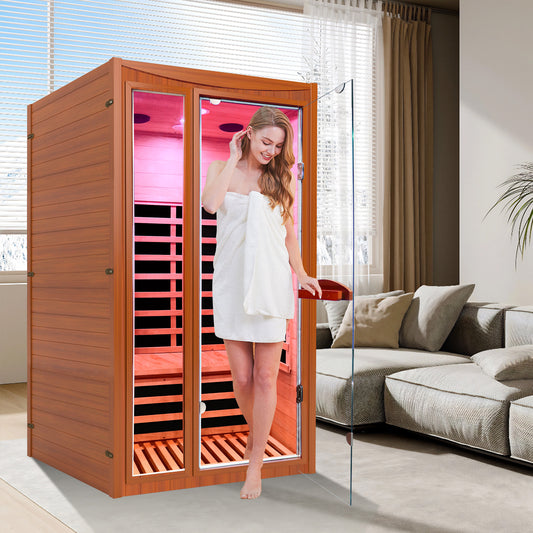
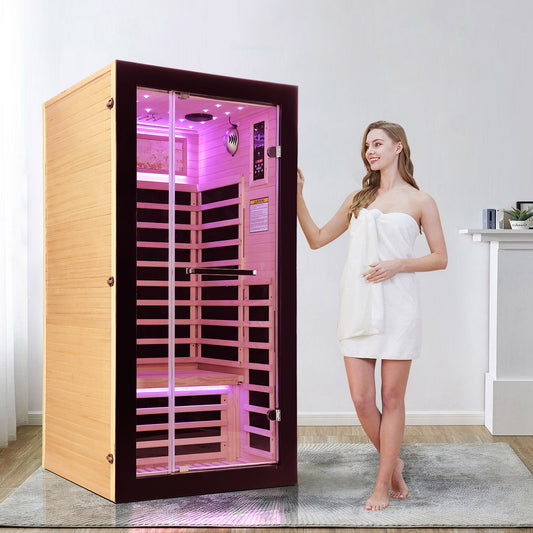
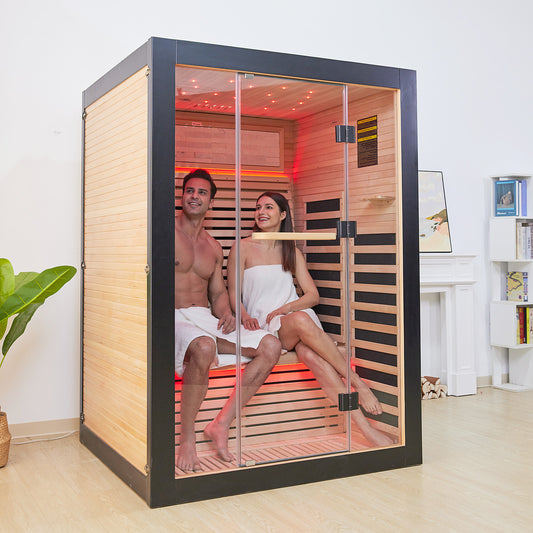
Infrared vs. Traditional Sauna at a Glance
Infrared and traditional saunas can both create a dedicated heat experience at home, but they produce that heat in different ways.
Infrared saunas use infrared heaters to transfer warmth more directly to the body while generally keeping the surrounding air at a lower temperature. Traditional saunas use a dedicated heater to warm the air inside the sauna and, on many models, heat sauna stones.
That difference affects how the heat feels, typical operating temperatures, humidity options, installation requirements, and the way each sauna fits into a daily routine.
| Feature | Infrared Sauna | Traditional Sauna |
|---|---|---|
| Heating method | Infrared heaters provide radiant heat | Sauna heater warms the surrounding air |
| Ambient temperature | Generally lower | Generally higher |
| Sauna stones | Not normally part of the heating system | Common on many traditional models |
| Humidity | Generally a dry-heat experience | Temporary added humidity may be possible on compatible stone-heater systems |
| Heat feel | Lower-temperature ambient environment | Hotter surrounding air |
| Electrical needs | Vary by model | Vary by model and heater |
| Installation | Depends on size, electrical setup, and placement | Depends on size, heater, electrical setup, and placement |
There is no single best sauna type for every home. The better choice is the one that fits your preferred heat experience, available space, electrical setup, household size, and expected use.
How Does an Infrared Sauna Work?
An infrared sauna uses infrared heaters rather than relying primarily on very hot surrounding air.
The infrared energy transfers warmth more directly to the body, which allows the sauna to operate at a lower ambient temperature than a traditional sauna.
For home users, the main difference is how the session feels. The surrounding air is generally less intense than in a high-temperature traditional sauna, while the infrared heaters continue providing radiant warmth.
Infrared sauna models can still differ significantly in size, heater arrangement, controls, electrical requirements, lighting, interior layout, and other features. Those specifications should always be checked on the individual product page rather than assumed from the sauna category alone.
How Does a Traditional Sauna Work?
A traditional sauna uses a dedicated sauna heater to raise the temperature of the surrounding air.
Many traditional sauna systems also use heated sauna stones. This creates the hotter ambient environment commonly associated with traditional sauna bathing.
On models designed for it, small amounts of water can be added to heated sauna stones according to the manufacturer's instructions. This causes a temporary increase in humidity and changes how the heat feels.
This should not be confused with a steam room. A traditional sauna still operates primarily as a hot-air environment. Adding water to compatible stones creates a short increase in humidity rather than continuously filling the room with steam.
If using water on sauna stones is important to you, confirm that the specific sauna and heater are designed for it before purchasing.
Which Sauna Feels Hotter?
Traditional saunas generally create the hotter surrounding-air experience.
Infrared saunas usually operate at lower ambient temperatures because the heating method is different.
That does not mean one type is automatically better than the other.
If you enjoy stronger surrounding heat, traditional sauna is likely the category to explore first.
If you prefer radiant warmth with a lower surrounding air temperature, infrared may be the more comfortable starting point.
The useful question is not simply:
Which sauna gets hotter?
A better question: Which type of heat am I more likely to enjoy and use regularly?
What Is the Difference in Humidity?
Infrared saunas generally provide a dry-heat experience and do not rely on heated sauna stones or added water.
Traditional saunas are also primarily hot-air environments, but compatible heater-and-stone systems may allow small amounts of water to be added to the stones.
This temporarily increases humidity and creates a different sensation of heat.
If that ritual is important to you, a traditional sauna with a compatible stone heater deserves stronger consideration.
Always follow the instructions for the exact sauna heater. Never assume that every heater is designed to accept water.
What About Warm-Up Time?
There is no single warm-up time that applies to every infrared or traditional sauna.
Warm-up depends on several factors, including:
- sauna size
- heater output
- starting room temperature
- construction
- electrical supply
- desired temperature
- indoor or outdoor placement
Infrared systems generally do not need to raise the surrounding air to the same high temperatures associated with traditional saunas.
Traditional systems need the heater and room—and, on stone-heater systems, the stones—to reach the desired operating condition.
Instead of relying on a universal warm-up claim, compare the specifications and operating instructions for the exact models you are considering.
Installation and Electrical Requirements
Electrical requirements should be checked before choosing a home sauna.
Do not assume that all infrared saunas use the same voltage, plug, amperage, or circuit. The same applies to traditional saunas.
Before ordering, confirm:
- overall exterior dimensions
- intended indoor or outdoor placement
- delivery access
- available electrical supply
- voltage
- rated power
- plug or hardwiring requirements
- required circuit
- ventilation and clearance guidance
- assembly requirements
Installation note: Electrical and installation requirements can vary considerably between models, even within the same sauna category. Always use the product specifications and installation instructions for the exact sauna you plan to purchase.
Which Sauna Uses Less Electricity?
Sauna type alone does not determine how much electricity a session will use.
A more useful comparison considers:
- rated heater or system power
- warm-up time
- session length
- thermostat cycling
- local electricity rates
In simple terms, a higher-powered system used for longer periods will generally consume more electricity.
Instead of assuming that every infrared sauna uses less energy than every traditional sauna, compare the actual rated power and expected usage of the specific models you are considering.
Which Sauna Is Better for a Small Home?
Neither category automatically wins.
A compact infrared sauna may fit a small room well, but traditional saunas can also be designed for relatively compact indoor spaces.
Measure the intended installation area before buying and allow for:
- exterior sauna dimensions
- door clearance
- delivery and assembly access
- electrical location
- manufacturer-required clearances
When space is limited, compare actual product dimensions first and sauna type second.
Which Sauna Is Easier to Maintain?
Routine care for both sauna types mainly involves keeping the interior clean, allowing moisture to dry, maintaining appropriate ventilation, and following the instructions supplied with the product.
Infrared saunas do not normally use traditional heated sauna stones.
Traditional stone-heater systems add a heater and stones to the ownership routine, so the heater and stones should be maintained according to the manufacturer's instructions.
Maintenance requirements can also vary by materials, location, frequency of use, and individual product design.
Neither category should be treated as completely maintenance-free.
Infrared vs. Traditional Sauna: Which Should You Choose?
Consider an infrared sauna first if you:
- prefer a lower surrounding air temperature
- want radiant warmth
- prefer a straightforward dry-heat experience
- expect to use your sauna regularly at home
Consider a traditional sauna first if you:
- prefer hotter surrounding air
- want a traditional heater-and-stone setup
- value the classic sauna experience
- want the option to add water to compatible heated sauna stones
After choosing the heat style you prefer, compare actual sauna models by:
- capacity
- dimensions
- installation location
- electrical requirements
- heater specifications
- available space
- controls and features
The right choice is the specific sauna that fits your home and the experience you want—not simply whichever category reaches a higher temperature.
Common Questions About Infrared and Traditional Saunas
Is an infrared sauna better than a traditional sauna?
Neither type is universally better.
Infrared and traditional saunas provide different heat experiences. Infrared saunas generally operate with lower surrounding air temperatures, while traditional saunas typically create a hotter environment and may use heated sauna stones.
The right choice depends on your heat preference, available space, installation conditions, and the specific sauna model.
Is a traditional sauna hotter than an infrared sauna?
Traditional saunas generally operate at higher surrounding air temperatures.
Infrared saunas typically use lower ambient temperatures because the heating method is different.
Exact operating temperatures vary by product.
Does an infrared sauna produce steam?
Generally, no.
Infrared saunas primarily use infrared heaters and normally operate as dry-heat environments.
Can I pour water on traditional sauna stones?
Only if the specific sauna heater and manufacturer instructions say that it is permitted.
Do not pour water onto a heater or heating system unless it is specifically designed for that use.
Which sauna is easier to install at home?
There is no universal answer.
Installation depends on the individual sauna's dimensions, electrical requirements, heater system, placement, and assembly requirements.
Always compare the specifications of the exact models you are considering.
Is infrared sauna healthier than traditional sauna?
Current research does not support a simple conclusion that one sauna type is universally healthier than the other.
Health-related sauna research continues to develop, and the evidence varies by outcome, population, sauna type, temperature, and frequency of use.
For a buying decision, it is more useful to compare heat preference, comfort, space, installation requirements, and individual product specifications rather than choosing based on exaggerated health claims.
Explore Outexer Saunas
Once you know which heat experience fits your routine, compare actual sauna models and specifications before making your final choice.
Prefer radiant warmth and generally lower ambient temperatures? Explore Outexer Infrared Saunas and compare available sizes, configurations, and features.
Prefer hotter surrounding air, heated sauna stones, and a more traditional sauna experience? Browse Outexer Traditional Saunas.
Still deciding? Use Find Your Sauna to narrow your options by sauna type, capacity, and intended space.